


A regulation, directly applicable
Regulation (EU) 2023/1542 of 12 July 2023 replaces the 2006 directive on batteries and accumulators. It is a regulation, not a directive. It therefore applies as it stands in every Member State, with no national transposition.
It covers the whole life cycle of a battery: design, placing on the market, information, second life, collection and recycling.
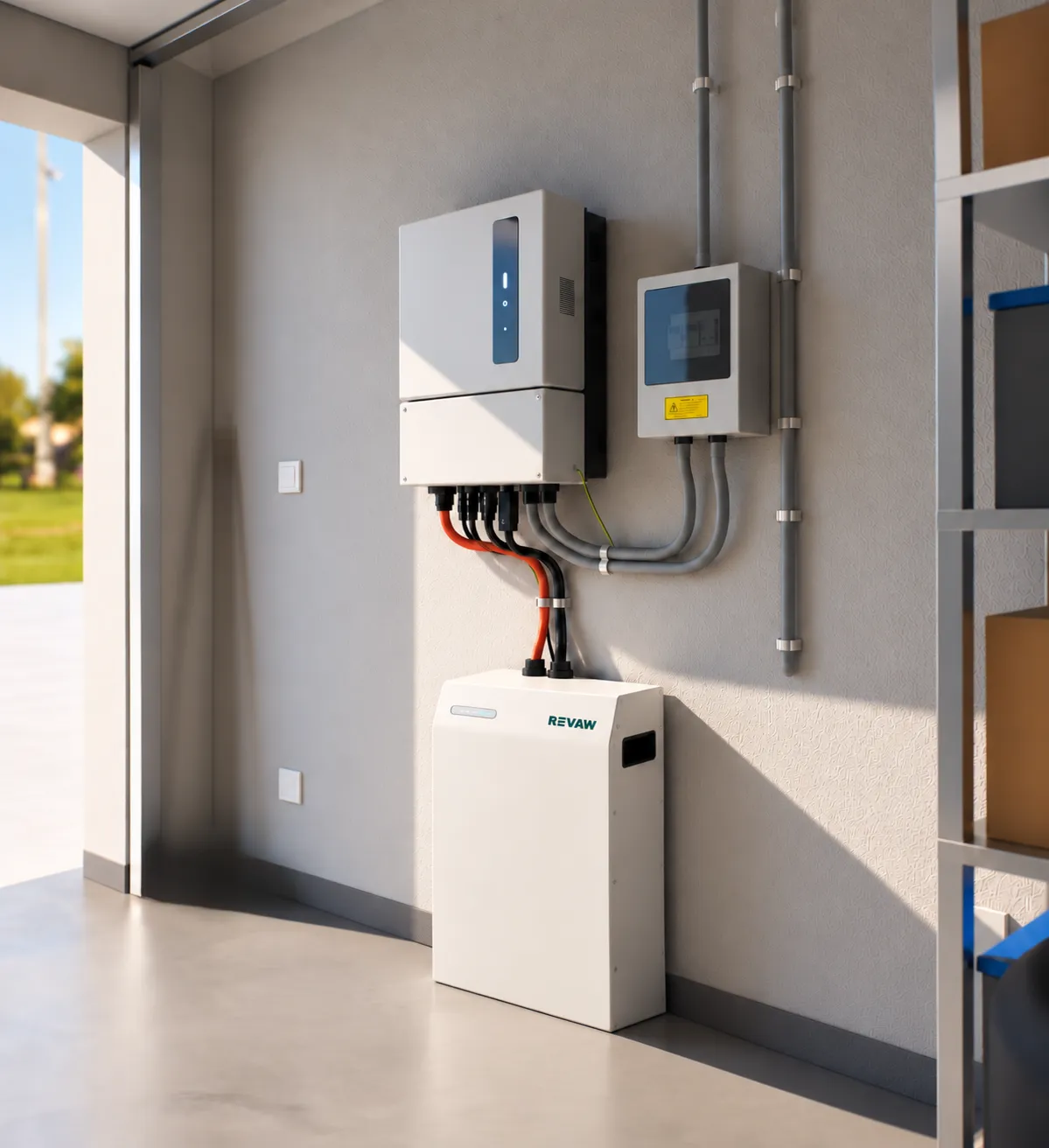
A home battery falls into the category of industrial batteries, since it weighs more than 5 kg and powers neither a vehicle nor a portable device. More precisely, it is a stationary battery energy storage system: a battery designed to store electricity and deliver it to its users, wherever it is installed (Article 3). Its obligations are those of industrial batteries above 2 kWh.
The dates that matter
| Date | What applies | Article |
|---|---|---|
| 17 August 2023 | Regulation enters into force | 96 |
| 18 February 2024 | General application | 96 |
| 18 August 2024 | State-of-health data in the battery management system (BMS) | 14 |
| 18 August 2025 | New rules on waste battery management | 96 |
| 18 February 2027 | Battery passport mandatory | 77 |
| 18 August 2027 | Due diligence on raw materials (postponed by two years) | 96, amended in 2025 |
| 18 August 2031 | First minimum recycled content targets | 8 |
| 18 August 2036 | Higher recycled content targets | 8 |
Due diligence was due to apply in August 2025. A 2025 regulation pushed it back to 18 August 2027, to give companies time to prepare.
Since 2024: state of health within reach
Since 18 August 2024, the management system of every stationary storage battery must hold up-to-date data on its state of health and expected lifetime (Article 14). Annex VII lists this data: remaining capacity, power, efficiency, self-discharge, internal resistance, total energy throughput, harmful events…
The buyer of the battery, or a third party acting on their behalf, must be able to read it at any time. The text gives three uses:
- making the battery available to an aggregator or an energy market player;
- assessing its residual value and remaining lifetime;
- making its reuse or repurposing easier.
For you, it is a monitoring tool: the state of health of an installed battery is no longer a black box.
February 2027: the battery passport
From 18 February 2027, every industrial battery above 2 kWh placed on the market must have a “battery passport” (Article 77). It is an electronic record, accessed through a QR code printed on the battery.
The passport brings together information on the model and on the individual battery, including data from its use. Access works on three levels:
- the public: general information on the model;
- notified bodies, market surveillance authorities and the Commission: the conformity documentation;
- anyone with a legitimate interest: repairers, second-life operators, recyclers, or the buyer who wants to put the battery to work on the energy market.
Revaw batteries already have an individual passport, available through a QR code. It will follow the European format as that format takes shape.
Second life, now with a legal framework
“Repurposing”: the legal term
The regulation sets out several ways to extend a battery’s life. The one that concerns us is repurposing: any operation whereby a battery is used “for a purpose or application other than that for which the battery was originally designed” (Article 3). A battery designed to drive a car that becomes a home storage battery has been repurposed.
Not to be confused with remanufacturing, which returns the battery to its original use. In that case the text requires at least 90% of the original capacity and no more than 3% difference in state of health between cells.
A repurposed battery is a product in its own right
This is the key point of the text. A repurposed battery is considered to be placed on the market again (recital 16). It must therefore comply with the whole regulation.
- Whoever repurposes it becomes its manufacturer within the meaning of the regulation (Article 38), with all the obligations that come with it.
- They must follow quality and safety control procedures for examination, performance testing, packaging and transport (Article 45).
- It carries new labels showing its change of status (Article 13).
- It gets a new passport, linked to the passport of the original battery or batteries (Article 77).
- Whoever places it on the market takes on extended producer responsibility, including for its end of life (recital 102).
When the original battery had become waste, one more step applies. To prove it is no longer waste, its holder must be able to show three things (Article 73):
- a state-of-health assessment, carried out in an EU Member State;
- its sale or transfer for a new use;
- suitable protection during transport.
The results of the state-of-health assessment must be included in the documentation given to the end user.
In short: a second-life battery sold in the EU is not a second-hand product with no warranty. It meets the same rules as any battery placed on the market, plus proof of its state of health.
Recycled content: a target for 2031
From 18 August 2031, industrial batteries above 2 kWh must contain a minimum share of recycled materials in their active materials (Article 8): 16% cobalt, 85% lead, 6% lithium and 6% nickel. In 2036, these rates rise to 26% cobalt, 85% lead, 12% lithium and 15% nickel.
These rates do not apply to repurposed batteries that were already on the market before being repurposed. The text thus recognises that extending the life of an existing battery already serves the goal.
What it changes for you as an installer
- Check the documentation: CE marking, user manual and, for a repurposed battery, the results of its state-of-health assessment.
- Scan the QR code: from 2027, it is the way into the passport. Get into the habit of showing it to your customers now.
- Use the BMS data: the state of health is open to the buyer and to those acting for them. It helps with monitoring and after-sales service.
- End of life is not your job. Producers of industrial batteries must take back waste batteries free of charge, whatever the brand (Article 61). Your customer does not have to buy a new battery from them.