

Today’s electric cars, tomorrow’s storage
In five years, the fully electric car has gone from niche to mass market in Europe. In 2025, 1,880,370 electric cars were registered in the European Union, or 17.4% of the market, compared with 9.1% in 2021.
Each of these cars carries a battery of several tens of kilowatt-hours. All of them will eventually leave their vehicle. Some will keep enough capacity to be used elsewhere.
A gap of around fifteen years
A car battery does not come out of the vehicle the year after it is sold. The International Energy Agency puts the gap between growth in battery demand and the arrival of comparable volumes at end of life at around 15 years. Most of the batteries deployed in recent years will stay in service until the mid-2030s.
The rules point the same way. Since Euro 7, carmakers must guarantee that an electric car keeps at least 80% of its battery energy for 5 years or 100,000 km, and 72% up to 8 years or 160,000 km. Batteries are designed to last, and they do.
Today, the batteries available for a second life therefore come mainly from:
- crashed vehicles;
- dismantled vehicles or vehicles declared beyond repair;
- early replacements: breakdown, recall, mandatory pack replacement;
- business fleets, which drive a lot and renew quickly.
180 GWh in 2035: an order of magnitude
How many batteries will that represent? The European platform Rebattex estimates that around 180 GWh of capacity could become available by 2035 in Europe. It would come from crashed, dismantled or end-of-service vehicles.
Rebattex offers a point of comparison: that is roughly the annual output of four large European gigafactories, at 40 to 50 GWh each.
Its authors say so themselves: it is an order of magnitude, not an official forecast. The figure depends on the size of the fleet, the lifetime of vehicles, accidents and the real condition of the batteries. And not everything will be reusable:
- some batteries will be too damaged;
- others will no longer perform well enough;
- others still will go straight to recycling, or stay on the road for longer.
What is still holding it back
The supply is there. What is missing, according to Rebattex, is the market infrastructure to make use of it, a “missing link” between manufacturing and recycling. The authors point to several obstacles:
- state-of-health diagnostics that vary from one player to another;
- vocabulary that differs between countries and trades;
- residual value that is hard to estimate;
- complex logistics, for heavy and regulated objects;
- responsibilities poorly shared between successive players;
- little transparency from one country to another.
Among their priorities, they propose to harmonise state-of-health assessment and to share common identification and data standards. That is exactly what the European battery passport is preparing, mandatory from February 2027.
Chemistry matters too
Not all the batteries in this supply are equally suited to home storage. In 2025, lithium iron phosphate (LFP) accounted for just over 10% of battery demand for electric vehicles in the European Union. Worldwide, it accounted for more than 55%.
Most of the batteries that will leave European cars in the coming years will therefore be nickel-based (NMC, NCA). The share of LFP will grow over time, but it will remain a minority for several years.
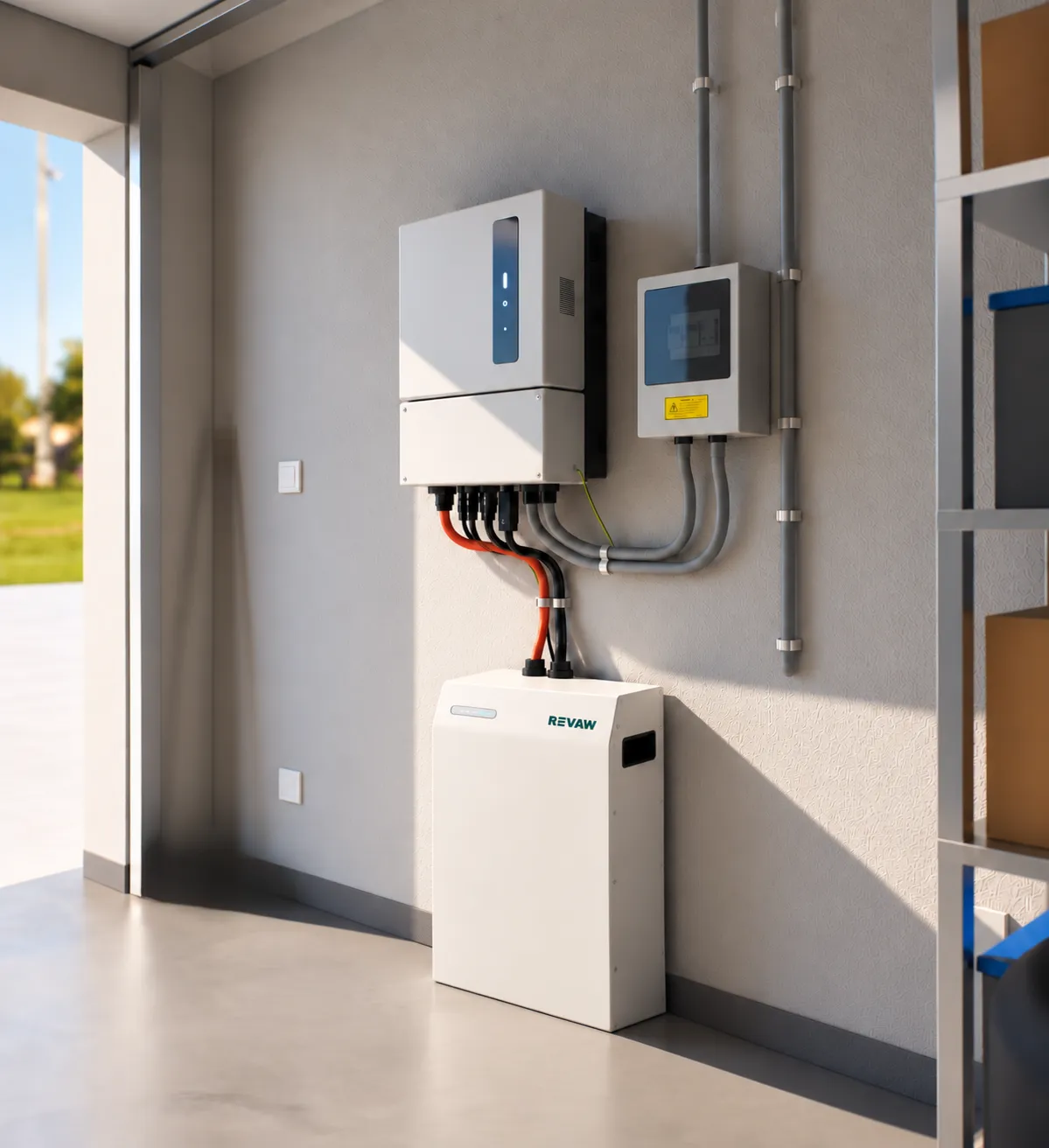
That is why Revaw chose 100% LFP, at the cost of demanding selection. We explain that choice in our article on LFP.
What it means for an installer
- Second life is not a niche. The supply grows with every electric car sold, and regulation now provides a framework for it.
- Quality depends on who does the sorting. With batteries of varied origins and conditions, everything rests on diagnostics, cell by cell, and on traceability.
- The right time is now. The supply chains taking shape today will be the ones that absorb the wave of the 2030s.