

LFP: what are we talking about?
A lithium-ion cell is defined first by its cathode, the positive electrode. That is what gives the chemistry its name.
- LFP: lithium iron phosphate (LiFePO4).
- NMC: nickel manganese cobalt oxide.
- NCA: nickel cobalt aluminium oxide.
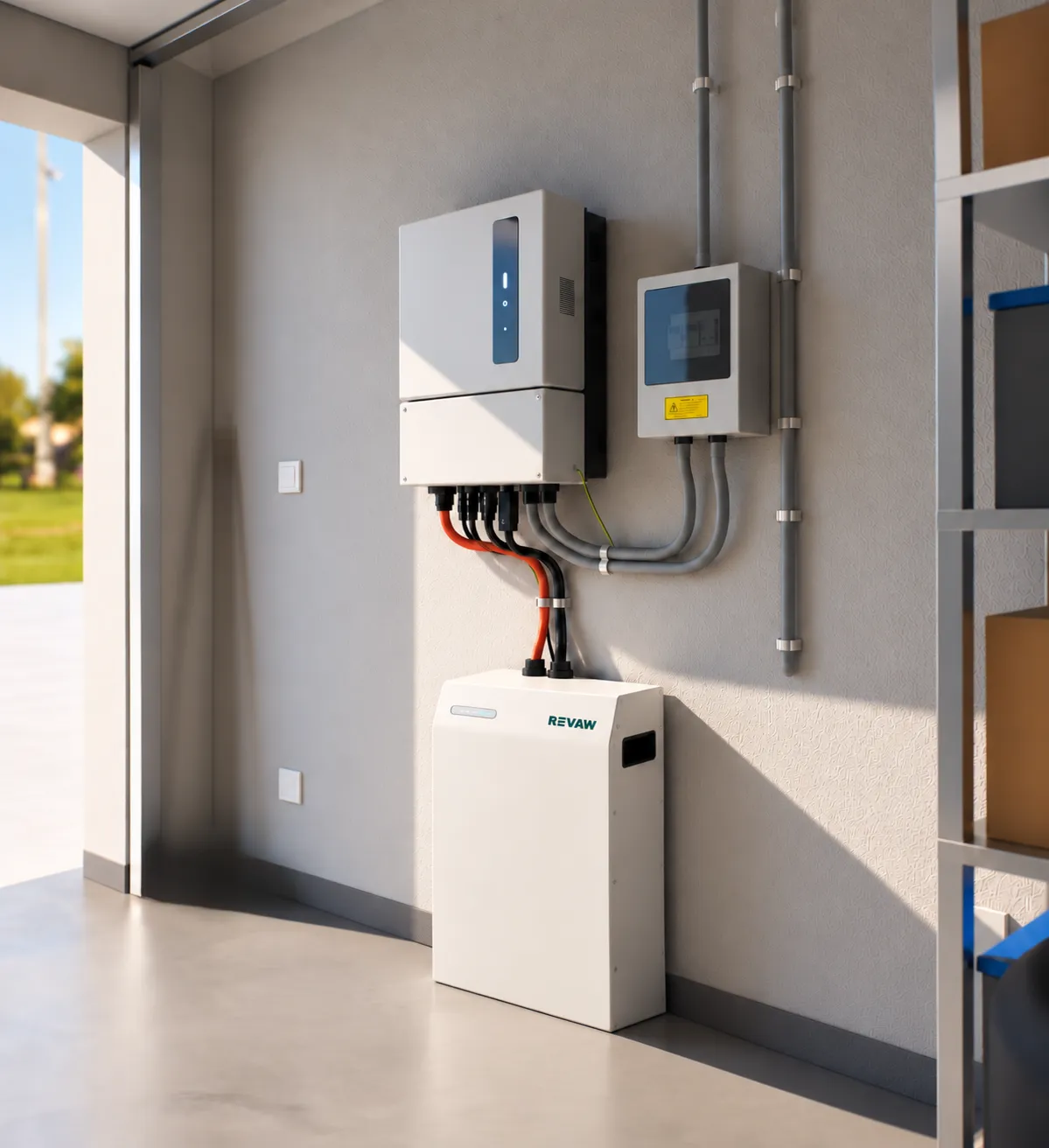
An LFP cell has a nominal voltage of 3.2 V. In a Revaw 13 kWh battery, 45 of these cells are arranged in three blocks of fifteen (15S3P) to deliver 48 V nominal.
A key point for what follows: the LFP cathode contains neither nickel nor cobalt.
A chemistry that has become the majority
Long confined to buses and power tools, LFP moved into cars and then into storage. According to the International Energy Agency, in 2025 it accounted for more than 55% of electric vehicle batteries deployed worldwide, compared with almost 50% a year earlier.
In stationary storage, the question is almost settled: LFP made up more than 90% of installations worldwide in 2025.
Europe is the exception. In the European Union, LFP still accounted for only just over 10% of demand for electric vehicle batteries in 2025. The LFP batteries leaving European cars in the coming years will therefore be a minority. Finding, sorting and tracing them takes real selection work.
Three reasons to choose LFP for a second life
01It runs cooler, and heats up later
The main risk with a lithium battery is thermal runaway: a cell heats up, its internal reactions speed up and it no longer cools down by itself.
A study published in 2014 in RSC Advances pushed three types of commercial cells into thermal runaway: one LFP and two based on metal oxides. The LFP cell was the one that went into runaway the latest, at 195°C, with the smallest temperature rise of the three.
The explanation lies in the structure of the material. Iron phosphate holds on to its oxygen far better than nickel and cobalt oxides. And it is this released oxygen that feeds the runaway.
For a battery installed in a garage, a few metres from a living space, this is the argument that counts most. At Revaw, this stability comes on top of other protections: electronics that limit power before cutting out, 1.5 mm steel walls and a pack tested to UN 38.3.
02It takes the cycles
LFP is known for its long cycle life. The Revaw 13 kWh battery is rated for more than 5,000 cycles. It carries a warranty of 10 years or 45,000 kWh delivered, whichever comes first.
Chemistry is not everything. A study by the US laboratory Sandia aged LFP, NMC and NCA cells for several years under different conditions. The result: within the same chemistry, the time taken to fall to 80% capacity varies by several thousand cycles depending on use. The factors at play are depth of discharge, current and temperature.
Home storage is fairly gentle on all three:
- usually one cycle a day, with no fast charging;
- moderate currents: 140 A at most for 271 Ah, barely more than half a C;
- a sheltered room, often at a mild temperature.
03Fewer critical materials
With no nickel or cobalt in the cathode, an LFP cell avoids two of the tightest metals on the market. That is one less weak point in the supply chain, and an argument your customers hear more and more.
LFP is still a lithium battery: it contains lithium and graphite. Extending its use before recycling is precisely how you get the most out of materials that have already been extracted.
The limits, honestly
No chemistry is perfect. LFP has three weak points, which the battery design has to make up for.
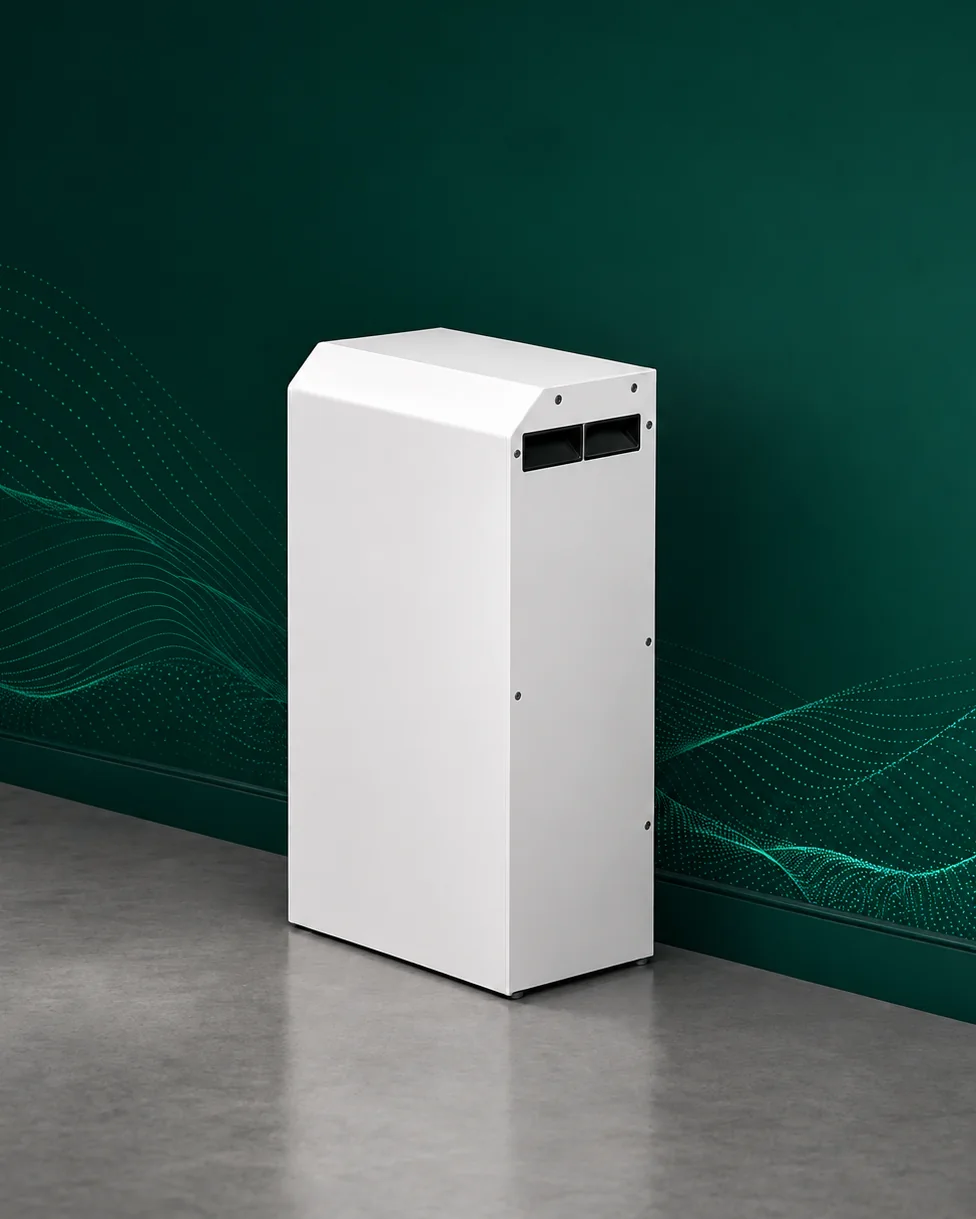
- It is heavier for the same capacity. Its energy density is lower than NMC’s. A drawback in a car, much less so on the floor: the 13 kWh weighs 115 kg, with side handles and four shock-absorbing feet for installation.
- Its voltage barely moves. Between almost empty and almost full, the voltage of an LFP cell hardly changes. So you cannot judge its condition by measuring its voltage alone. It takes real capacity tests, cell by cell. We come back to this in our article on state of health (SoH).
- It does not like charging in the cold. Like all lithium cells with a graphite anode, an LFP cell charged at low temperature gets damaged. Revaw batteries have a heating mat for garages and unheated rooms.
What it changes for you
For an installer, LFP means a battery you can install close to the house, that will last the length of the warranty, and whose make-up you can explain to your customer plainly.
If you would like to discuss a specific installation (room, inverter, power), our team will answer.